 Detailed Content:
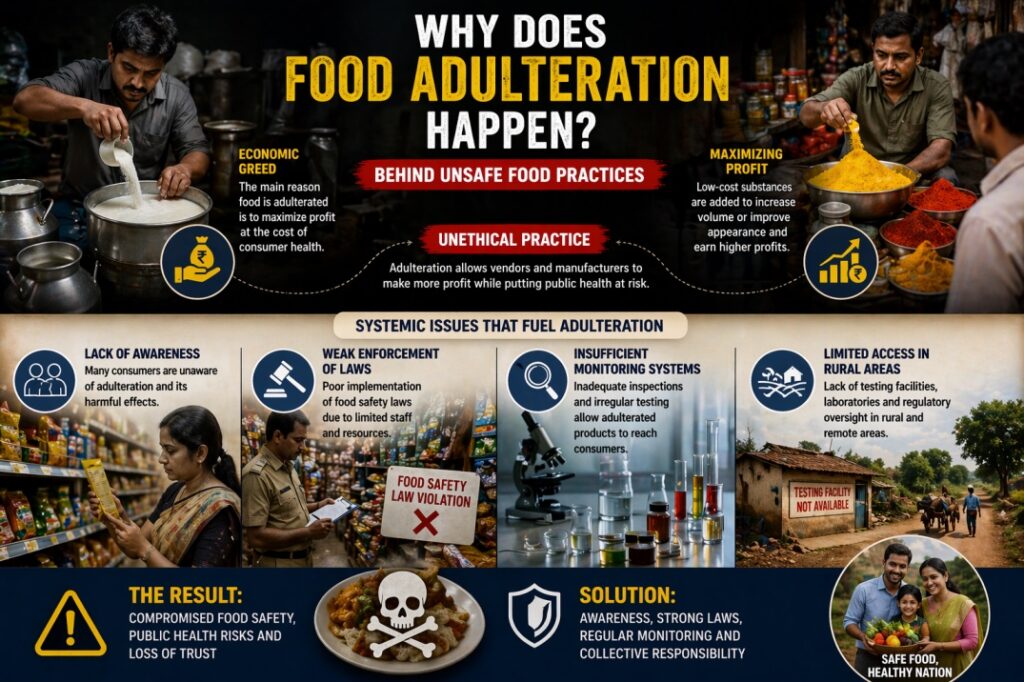
1️⃣ Food adulteration mainly occurs due to economic greed and the desire to maximize profit. Many food vendors and manufacturers add low-cost substances to increase volume or enhance the visual appeal of products. This unethical practice allows them to earn higher profits while compromising food safety.
2️⃣ In addition, lack of awareness among consumers, weak enforcement of food safety laws, and insufficient monitoring systems contribute significantly to this problem. In rural and less developed areas, limited access to testing facilities and regulatory oversight further increases the chances of adulteration, making it a persistent and widespread issue.
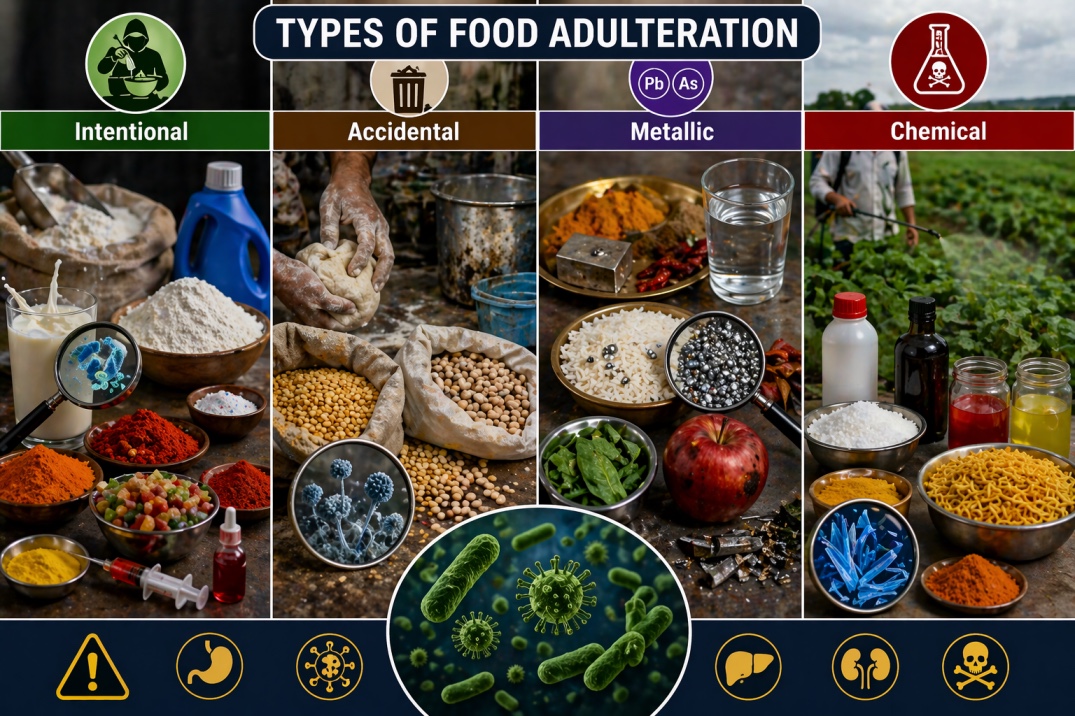
Detailed Content:1️⃣ Food adulteration can be classified into various types depending on how contamination occurs. Intentional adulteration involves deliberately adding harmful substances such as chalk powder in flour, detergent in milk, or artificial coloring agents in food products to increase profit margins. These practices are dangerous and illegal.
2️⃣ On the other hand, accidental adulteration occurs due to poor hygiene, improper storage, or contamination during processing and transportation. Metallic adulteration involves the presence of toxic metals like lead or arsenic, while chemical adulteration includes the use of pesticides, preservatives, and synthetic chemicals. Each type poses serious health risks and highlights the need for strict control measures.
Link: https://fssai.gov.in
 Detailed Content:
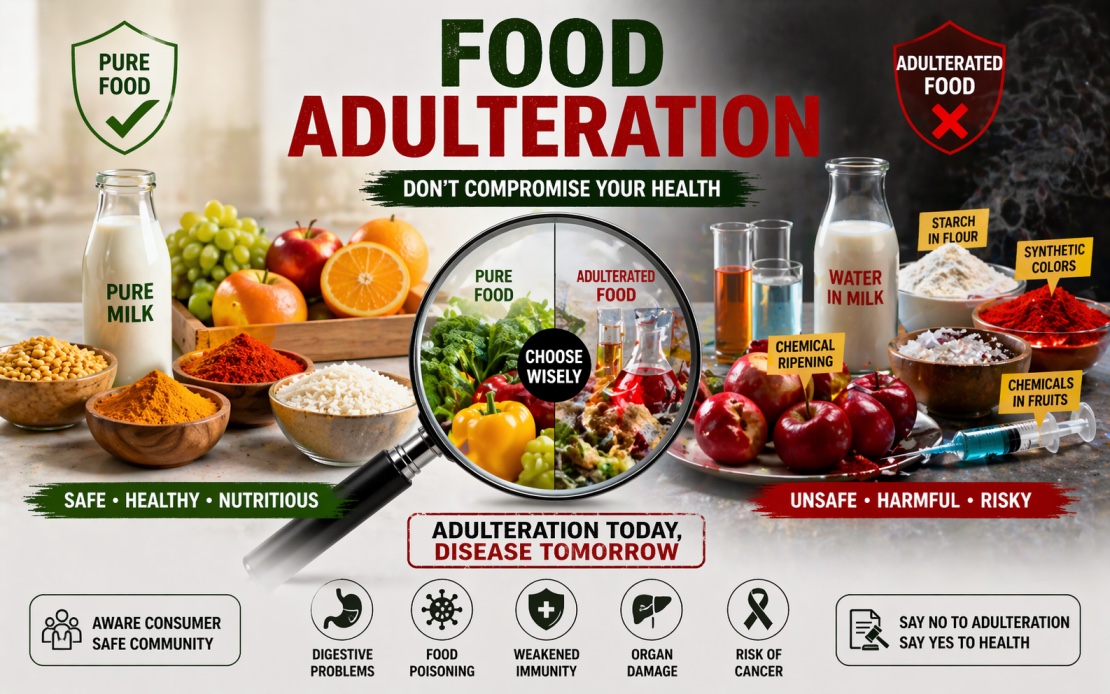
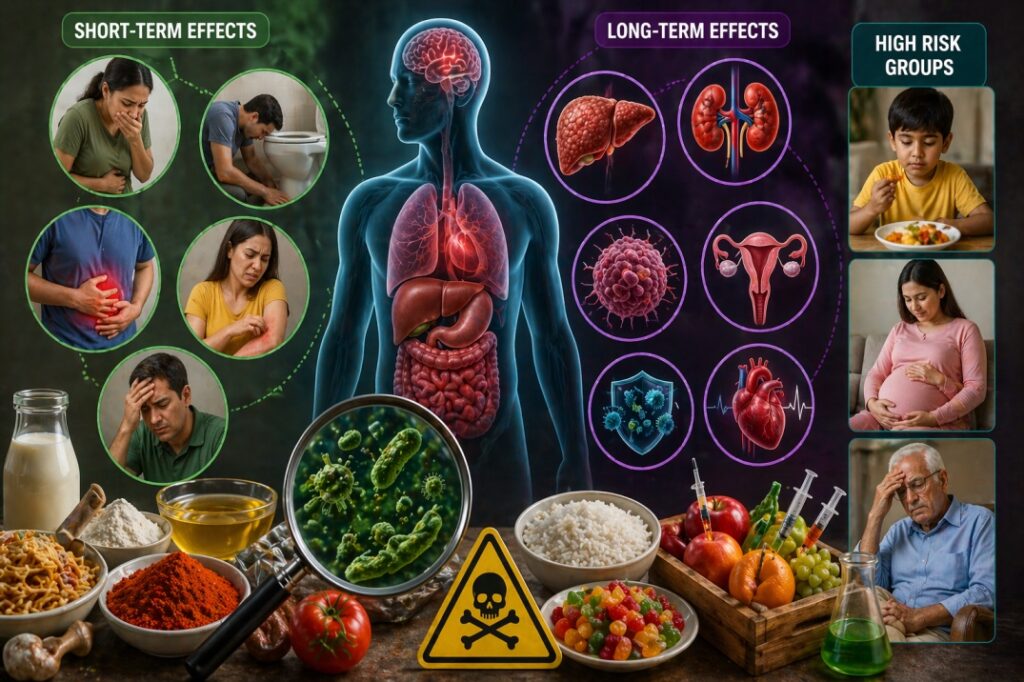
1️⃣ The consumption of adulterated food can lead to both short-term and long-term health problems. Immediate effects include food poisoning, nausea, vomiting, stomach infections, and allergic reactions. These symptoms may seem mild initially but can become severe with continuous exposure.
2️⃣ Long-term exposure to adulterated food can result in serious health conditions such as organ damage, liver and kidney disorders, hormonal imbalance, weakened immunity, and even cancer. Vulnerable groups like children, pregnant women, and elderly individuals are at higher risk, making it essential to ensure strict food safety practices.
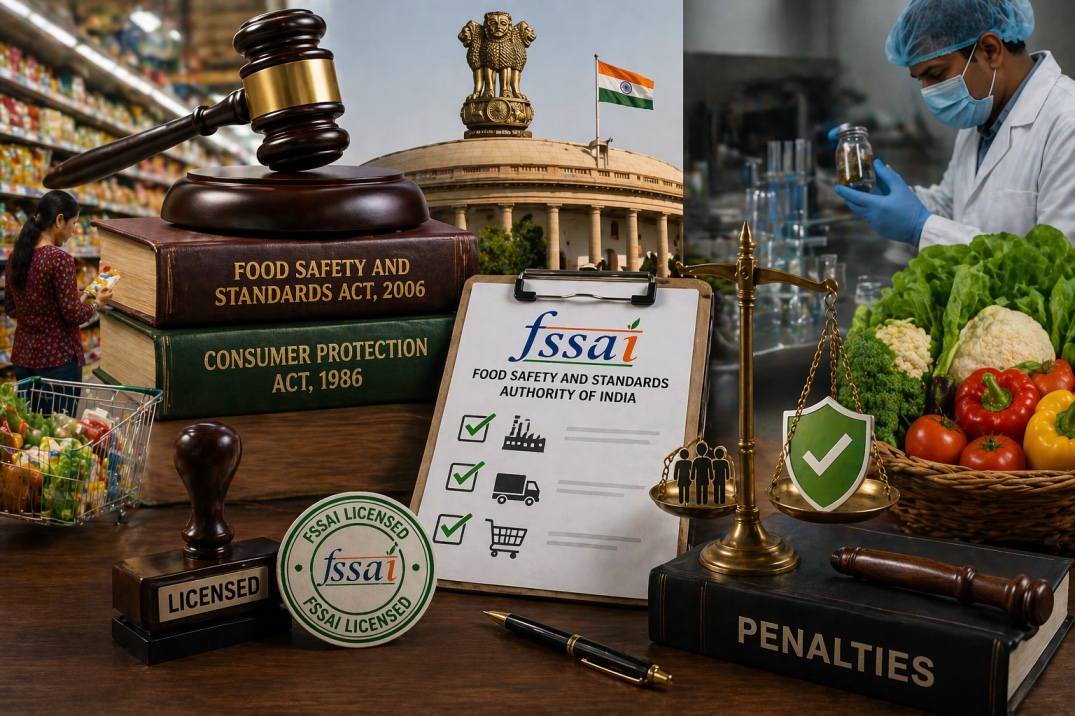
Detailed Content: Food safety in India is governed by a well-defined legal framework aimed at protecting consumers and maintaining food quality standards. The government has established strict guidelines for food production, storage, distribution, and sale to ensure that food products are safe for consumption.
 Regular inspections, licensing systems, and penalties for violations are enforced to control adulteration practices.These laws also empower consumers by giving them the right to demand safe and quality food. Government initiatives and awareness campaigns further strengthen the implementation of these regulations.